
Customer Refund Management for Travel Agencies
Customer refunds are an important part of travel agency operations. Flight cancellations, changes in travel plans, hotel booking issues, and cancelled tour packages can all lead to refund requests. While these situations are common in the travel industry, managing the financial side of cancellations can become complicated without a clear process.
For travel agencies, refund management involves more than returning money to a customer. It also requires accurate financial records, proper communication, coordination with suppliers, and careful tracking of outstanding amounts. When these activities are handled across separate spreadsheets, emails, and accounting records, it becomes more difficult to maintain a clear overview of each transaction.
Travel agency refund management helps businesses organize cancellation-related financial activities, keep customer records consistent, and maintain better control over their financial operations. With a structured workflow and appropriate management tools, agencies can handle refund requests more efficiently while reducing confusion for both employees and customers.
Why Refund Management Matters for Travel Agencies
Travel bookings often involve multiple parties, including airlines, hotels, tour operators, transportation providers, and other travel service suppliers. Each provider may have different cancellation conditions, refund policies, and processing timelines.
When a customer cancels a booking, the agency must determine which conditions apply, identify the amount that may be refundable, and communicate the relevant information clearly. Depending on the booking terms, the customer may receive a full refund, a partial refund, or no refund at all.
The agency must also record the financial impact of the cancellation. This may include money already received from the customer, payments made to suppliers, cancellation fees, and amounts that remain outstanding.
Without a consistent process, employees may need to check several records before they can answer a basic question: What is the current financial status of this cancelled booking?
A well-organized refund management process helps travel agencies answer this question more confidently. It supports financial accuracy, improves internal coordination, and makes it easier to provide customers with clear information about their refund requests.
Common Refund Management Challenges
1. Tracking Refund Requests Across Different Records
Travel agencies may receive refund requests through email, messaging applications, telephone calls, or direct conversations with customers. If the details of these requests are recorded in different places, employees may struggle to identify the latest information.
For example, a customer may contact the sales team to cancel a hotel reservation while the finance team maintains the payment records separately. If the cancellation details are not communicated correctly, the two teams may work with different information.
Keeping refund-related information organized helps employees understand the status of a request and reduces the need to search through multiple records.
2. Maintaining Accurate Financial Records
A cancellation does not necessarily mean that the original transaction can simply be removed from the agency's financial records. The agency may have already received payment from the customer or transferred money to a supplier.
Consider a customer who pays for a holiday package in advance. Later, the customer cancels the trip, and the applicable conditions allow a partial refund. The agency must account for the original payment, any applicable deductions, the amount returned to the customer, and any remaining financial obligations.
If these transactions are not recorded consistently, the agency may have difficulty reconciling its financial records or determining the actual financial impact of the cancellation.
Accurate records help preserve a clear history of the original sale and the subsequent refund-related transactions.
3. Managing Different Supplier Policies
Refund conditions vary depending on the service provider and the type of booking. An airline ticket may have different cancellation conditions from a hotel reservation or an organized tour.
In some cases, the agency may need to wait for confirmation from a supplier before it can finalize the amount refundable to the customer. In other cases, cancellation fees or non-refundable service charges may apply.
Travel agencies therefore need to distinguish between a customer's refund request, the supplier's response, and the actual financial transaction. Treating these as separate steps helps prevent misunderstandings and unrealistic expectations.
4. Communicating Refund Status to Customers
Customers naturally want to know whether their refund has been approved, how much they will receive, and when they can expect the money.
If employees cannot quickly access the relevant booking and payment information, answering these questions may take longer than necessary. Repeated inquiries can also create additional work for sales and customer service teams.
Clear internal records make it easier to provide consistent updates. They also help employees explain when a request is still being reviewed, when supplier confirmation is pending, or when a refund transaction has been recorded as completed.
5. Understanding the Financial Impact of Cancellations
Refunds affect more than customer satisfaction. They can also influence cash flow, outstanding balances, supplier settlements, and the profitability of individual bookings.
If refund transactions are not recorded properly, management may have an incomplete picture of the agency's financial position. A booking that initially generated revenue may later involve additional costs or a reduction in the amount retained by the business.
Recording these changes accurately helps agencies understand their financial performance and make more informed operational decisions.
How to Improve Refund Management in a Travel Agency
Improving refund management does not necessarily require a complicated process. Travel agencies can begin by establishing clear procedures for recording requests, reviewing cancellation conditions, documenting financial transactions, and communicating with customers.
Establish a Consistent Refund Workflow
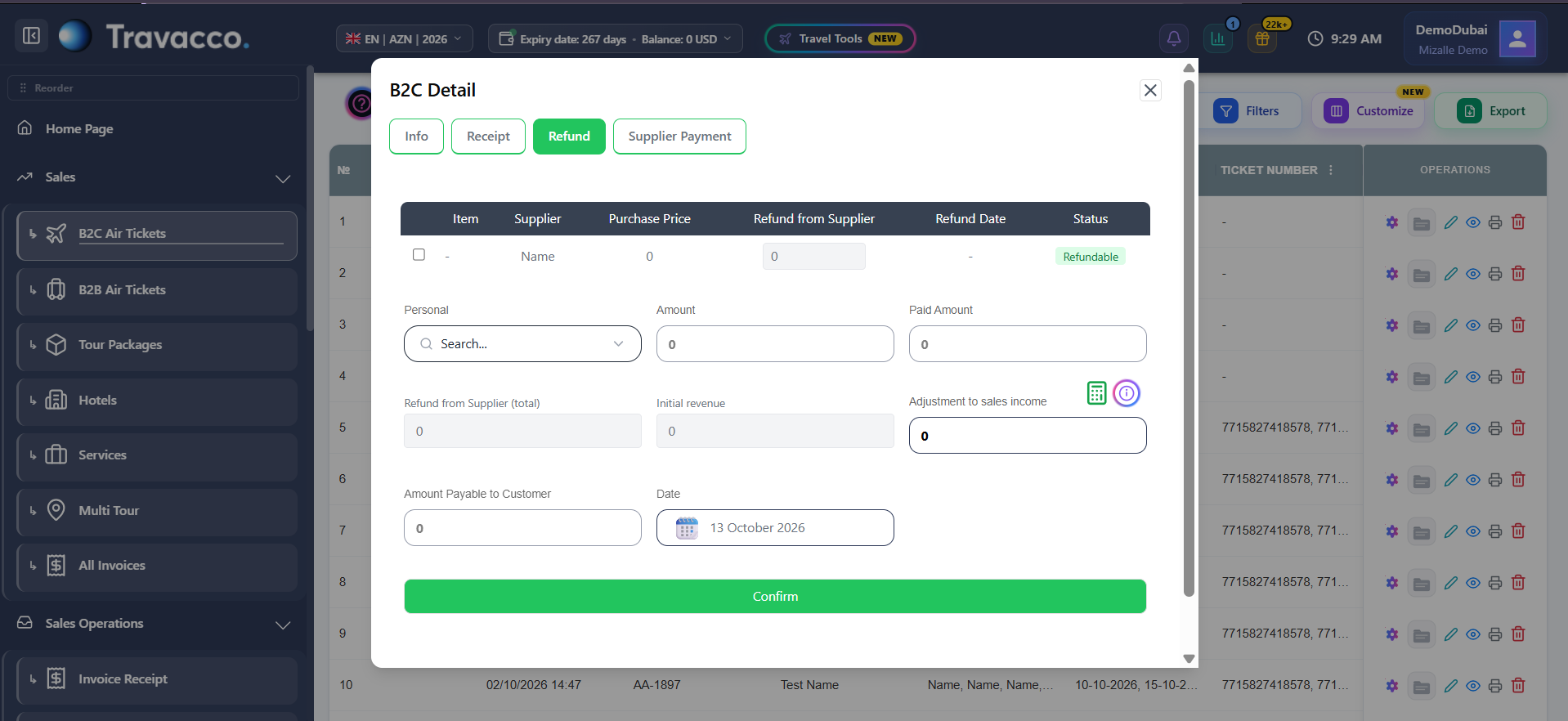
Every refund request should follow a defined process. The workflow may begin with receiving the customer's request and identifying the affected booking. Employees then review the applicable cancellation terms, confirm the refundable amount, coordinate with the relevant supplier when necessary, and record the outcome.
The final stage involves documenting the refund transaction and updating the relevant financial records.
A consistent workflow helps employees understand their responsibilities and reduces the likelihood of important steps being overlooked.
Keep Booking and Payment Information Connected
Refund decisions depend on the details of the original booking and its payment history. Employees should be able to identify how much the customer paid, whether any supplier payments were made, and what financial obligations remain.
When booking and financial information can be reviewed together, employees spend less time gathering details from separate sources. This also makes it easier to explain the financial outcome of a cancellation.
Record Every Relevant Transaction
A reliable refund process requires clear records of both the original sale and subsequent financial activity. Depending on the situation, these records may include the original customer payment, supplier charges, cancellation fees, approved refund amounts, and completed refund transactions.
Maintaining this history helps employees investigate discrepancies and provides management with a more complete view of the transaction.
It is also important to distinguish between a refund that has been requested, one that has been approved, and one that has actually been paid. These statuses represent different stages and should not be treated as interchangeable.
Assign Clear Responsibilities
Refund management often involves sales, finance, and customer service employees. Defining who reviews cancellation conditions, who confirms financial details, and who communicates with the customer can reduce confusion.
Clear responsibilities are particularly valuable when an agency handles a high volume of bookings or operates with several employees managing different parts of the same transaction.
Review Refunds Regularly
Periodic reviews help agencies identify requests that have remained unresolved, transactions that require additional documentation, and discrepancies between recorded and completed payments.
A regular review also helps management recognize recurring issues, such as frequent supplier-related delays or common mistakes in cancellation records.
By examining these patterns, agencies can improve their procedures and reduce avoidable administrative work.
The Role of Travel Agency Management Software in Refund Tracking
As a travel agency grows, managing cancellations and refunds manually can become increasingly difficult. Spreadsheets may be sufficient for a small number of transactions, but they can become harder to maintain when employees handle many bookings, payment types, and suppliers.
Travel agency management software can help organize operational and financial information in a centralized environment. Depending on the platform's capabilities, this may include customer records, booking details, payment transactions, refunds, and financial reporting.
Better Visibility Into Financial Transactions
Centralized financial records help employees understand how a cancellation affects the original booking. Instead of relying entirely on separate documents, they can review the relevant recorded transactions and identify what still needs attention.
This visibility is useful when managers need to investigate an unusual transaction, answer a customer's question, or review the status of an outstanding financial obligation.
More Consistent Record-Keeping
A structured system encourages employees to record transactions using consistent procedures. This can reduce dependence on individual spreadsheets and make financial information easier to review across the team.
Consistent records also support more reliable reporting, provided transactions are entered correctly and the system's reporting functions cover the information required by the agency.
Improved Coordination Between Teams
When sales and finance employees work with organized records, they can more easily understand the financial history of a booking. This helps reduce repeated requests for information and supports more consistent communication with customers.
The goal is not simply to process refunds faster. It is to make sure that each cancellation and its financial consequences are documented clearly.
More Informed Financial Decisions
Refund information can contribute to a broader understanding of an agency's financial performance. By reviewing cancellations, refunds, and related expenses, managers can identify patterns and assess how these transactions affect the business.
However, meaningful analysis depends on complete records and appropriate reporting. Software provides the structure for organizing information; accurate data entry and sound financial procedures remain essential.
How Travacco Supports Refund Management for Travel Agencies
Travacco is a business solution designed for travel agencies, bringing together tools for managing sales, customers, and financial operations.
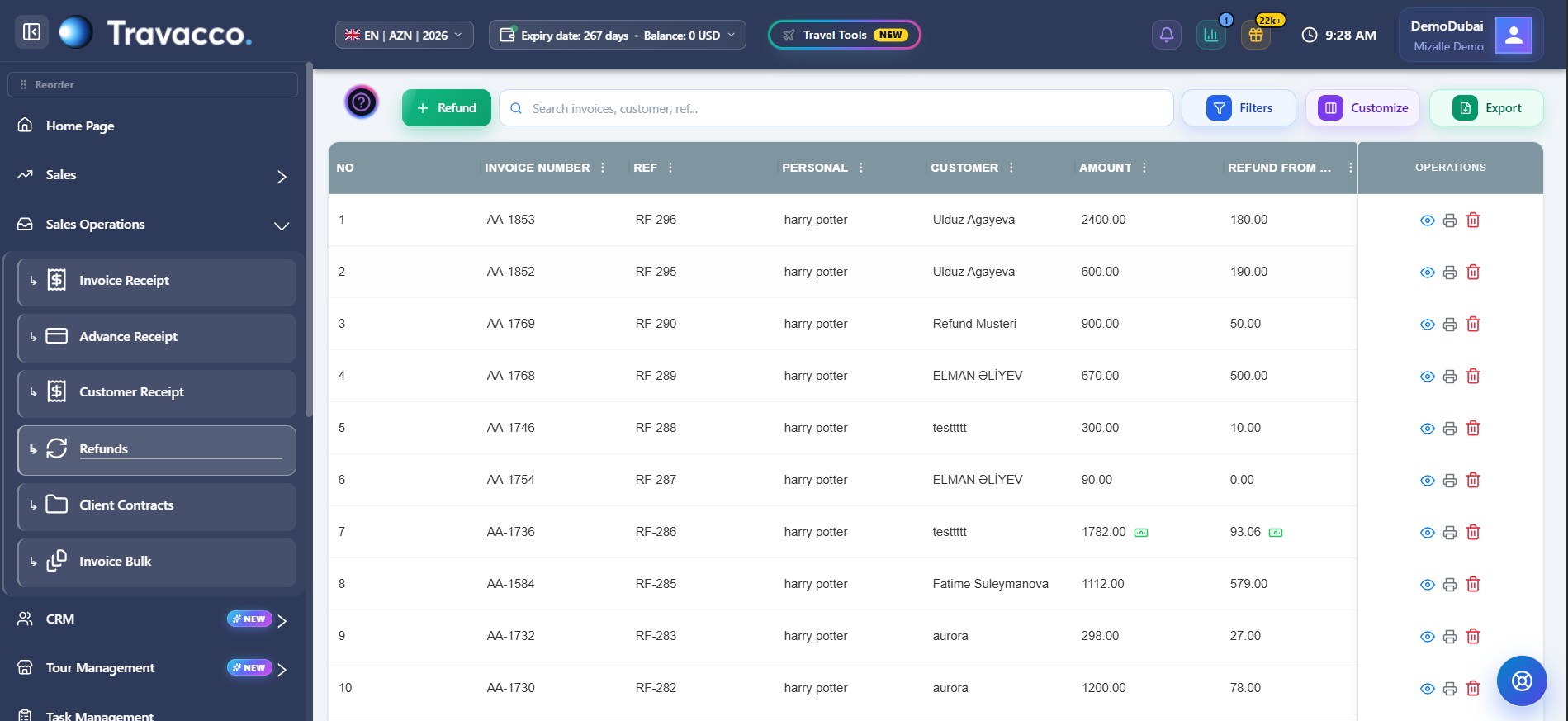
Its Sales Operations functionality includes Refunds, alongside other financial functions such as Invoice Income, Advance Payment, Customer Income, Customer Contracts, and Bulk Invoice. These functions support the management of different financial activities within a travel agency's operational workflow.
For agencies handling cancelled bookings, the Refunds function is relevant to organizing refund-related financial operations. Keeping these activities within a structured business management environment can help employees maintain clearer financial records and manage transactions as part of their broader operations.
Travacco's wider financial functionality also addresses other stages of the customer transaction lifecycle. Customer Income supports the recording of incoming customer payments, while Advance Payment addresses advance-payment transactions. These activities are important when reviewing the financial history associated with a booking.
For example, an agency may receive an advance payment for a tour package and later face a cancellation request. Employees need to understand the original payment and record the relevant financial outcome according to the applicable cancellation terms. Having dedicated financial functions helps the agency manage these activities within its business processes.
It is important to note that the applicable refund amount and the conditions for returning money depend on the booking terms, supplier policies, and the agency's procedures. A management system supports the recording and organization of financial activities; it does not replace the need to review these conditions or obtain the necessary approvals.
For travel agencies looking to bring sales and financial operations into a more organized workflow, Travacco provides a platform built around the specific needs of the travel industry.
Learn more about Travacco at travacco.com.
Best Practices for Reliable Refund Management
Even with suitable management software, travel agencies need clear internal procedures to keep refund operations accurate and consistent. The following practices can help establish a more reliable process:
- Document each request: Record the relevant booking, the reason for cancellation, and the date the request was received.
- Review the applicable terms: Check the cancellation conditions before confirming the amount that may be refunded.
- Separate refund stages: Distinguish between requested, approved, pending, and completed refunds.
- Maintain transaction history: Keep the original payment and subsequent financial transactions properly documented.
- Communicate clearly: Provide customers with accurate updates based on the latest available information.
- Review unresolved cases: Regularly check outstanding requests and identify transactions that need further action.
- Protect customer information: Limit access to sensitive financial and personal data to authorized employees.
- Reconcile financial records: Compare recorded transactions with the relevant payment and accounting records according to the agency's procedures.
These practices help create a more transparent process and make it easier for employees to manage cancellations without losing sight of their financial implications.
Refunds are an unavoidable part of travel agency operations, but managing them does not have to create unnecessary confusion. A clear refund workflow helps agencies organize cancellation requests, maintain accurate financial records, coordinate between teams, and provide customers with more consistent information.
Effective travel agency refund management depends on several elements working together: clear procedures, accurate transaction records, an understanding of supplier policies, and appropriate management tools.
For agencies that want better visibility into their financial operations, a structured system can make refund-related activities easier to organize and review. Travacco supports travel agencies through dedicated Sales Operations functions, including Refunds, within a broader business management solution.
By combining reliable procedures with organized financial records, travel agencies can manage cancellations more confidently, maintain better financial control, and provide a more professional customer experience.