
The Travel Agency With a Memory Has an Advantage
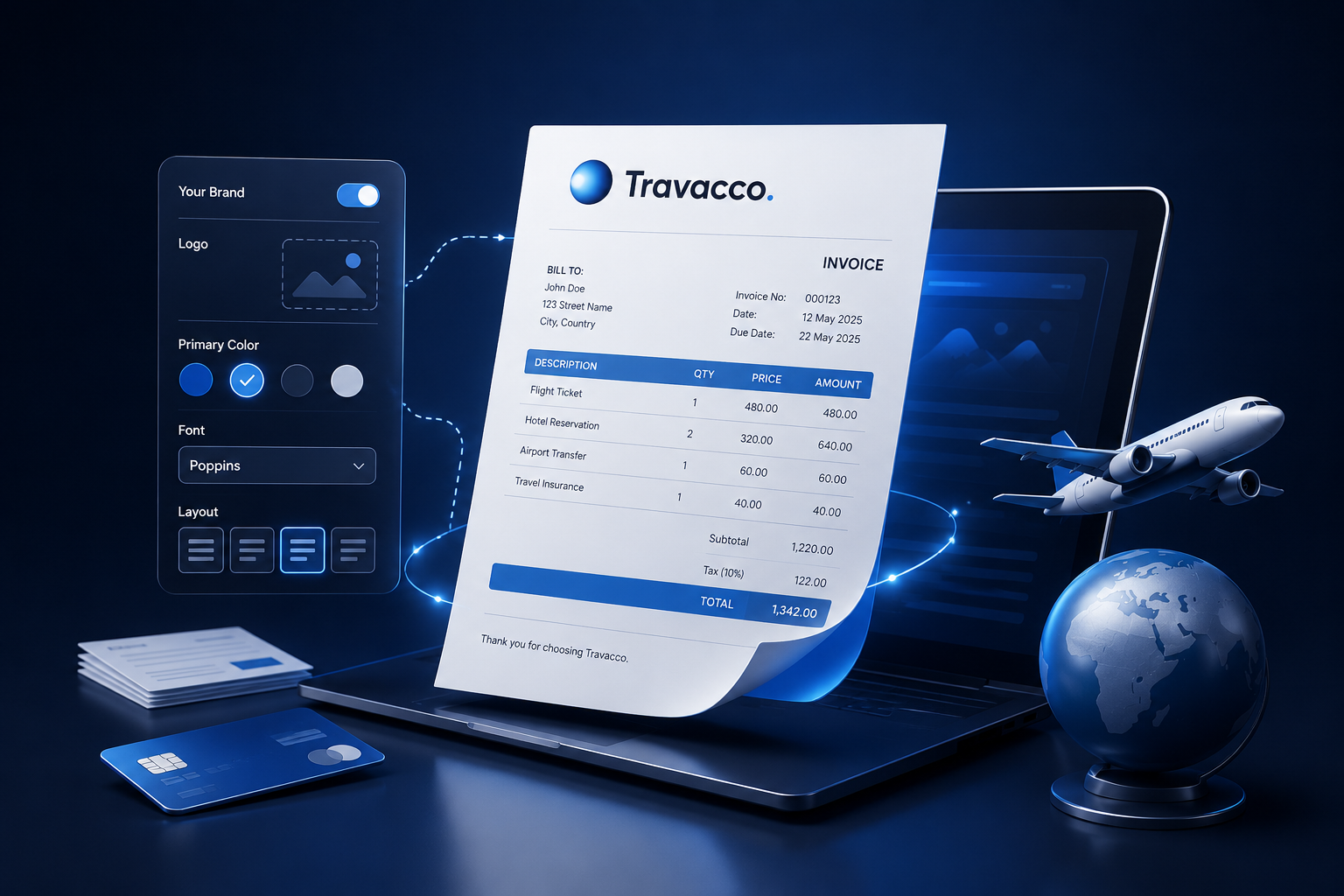
In the travel industry, customer relationships are built over time.
A customer may initially contact an agency for an airline ticket, return later for a hotel reservation, request a tour package months afterward, and eventually become a regular customer. Each interaction contributes to a broader relationship between the customer and the agency.
However, the value of this relationship depends significantly on how effectively the agency records, organizes, and uses the information generated throughout the customer journey.
This is where having a structured business memory becomes an operational advantage.
Customer History Is More Than a Record
For a travel agency, customer information extends far beyond a name, telephone number, and email address.
A complete customer history can include previous bookings, flight and hotel preferences, payment records, reservations, documents, requests, sales activity, and communication history.
When this information is stored across spreadsheets, messaging platforms, email accounts, individual files, and separate systems, employees may have access to the information, but the business does not necessarily have a unified view of the customer.
This creates unnecessary operational complexity.
Employees spend time searching for previous information. Customers may be asked to provide the same details repeatedly. Managers may have limited visibility into customer relationships, while sales opportunities can remain unnoticed.
A CRM system addresses this challenge by transforming scattered information into a structured customer history.
Why Customer Memory Matters in Travel
Travel purchases are rarely isolated transactions.
A customer who books an international flight may also require accommodation, transfers, insurance, visa assistance, tours, or additional travel services.
The initial transaction therefore creates information that can remain relevant for future interactions.
Consider a customer who has previously booked several family holidays through an agency. Their previous reservations may indicate the destinations they have selected, the type of accommodation they prefer, the number of travelers in their group, and the services they commonly request.
If this information is readily available to the sales team, the next interaction can begin with a clear understanding of the customer's history.
Instead of treating every inquiry as a new relationship, the agency can continue the existing one.
This is one of the practical values of CRM.
Travacco CRM: Connecting the Customer Relationship
Travacco CRM is designed specifically for travel agencies and tourism businesses, where customer relationships are closely connected with sales, reservations, payments, documents, and services.
Rather than functioning only as a customer contact database, Travacco CRM brings customer-related activities into a centralized business environment.
Customer profiles can be connected with relevant travel activity, including flights, hotels, tours, payments, reservations, documents, and other interactions with the agency.
This provides the team with a clearer view of the customer's relationship with the company.
For a sales manager, this means that customer information is not limited to basic contact details.
The manager can work with the context surrounding the customer.
For management, it provides greater visibility into customer activity.
For the wider team, it reduces dependence on information stored exclusively in individual employees' files or personal records.
From Individual Knowledge to Company Knowledge
One of the challenges faced by growing travel agencies is the dependence on individual employees.
A sales manager may remember a customer's preferences, previous requests, or communication history. However, if that information remains only in the employee's memory or private conversations, it is difficult for the organization to use it consistently.
This becomes particularly important when responsibilities change or multiple employees serve the same customer.
A centralized CRM changes the structure of this information.
Customer knowledge becomes company knowledge.
With Travacco, relevant customer information can remain within the business system, allowing authorized team members to access the information they need when managing customer relationships.
This supports continuity and makes customer service less dependent on one person's memory.
CRM and the Opportunity for Repeat Business
Customer retention is closely connected with the ability to maintain a relationship after the initial transaction.
- A completed booking should not necessarily represent the end of the customer relationship.
- A previous flight can be followed by another flight.
- A hotel booking can be followed by another accommodation request.
- A family tour can be followed by another holiday.
- A customer who previously requested one service may later require several additional services.
The challenge is identifying and managing these opportunities systematically.
Travacco CRM provides travel agencies with a structured customer history that can support ongoing sales and follow-up activities.
Instead of relying entirely on employees to remember previous interactions, the agency can use the information already accumulated through its relationship with the customer.
The objective is not simply to store more information.
It is to make existing information more useful.
The Importance of Connected Operations
CRM becomes significantly more valuable when it is connected with other areas of the business.
- A travel agency does not operate through customer management alone.
- A typical transaction can involve a customer, a supplier, a sales manager, a payment, an invoice, a contract, a reservation, and several documents.
When these activities are managed through disconnected tools, employees often have to transfer information manually between systems.
Travacco approaches these processes as part of a connected travel-business environment.
Customer management can work alongside sales operations and financial processes, allowing information generated during the customer journey to remain connected to the wider business workflow.
This reduces unnecessary duplication and gives teams a more consistent view of their operations.
The Customer Portal: Extending the Relationship Beyond the Office
A modern customer relationship does not have to depend entirely on direct communication with the agency.
Travacco Customer Portal extends the customer experience by providing travelers with a digital environment connected to their relationship with the travel agency.
Customers can access relevant reservation information, documents, payment-related information, and updates through their portal.
This creates a more structured communication channel between the agency and the customer.
For the travel agency, it can reduce repetitive requests for information that has already been provided.
For the customer, it provides a more convenient way to access important travel-related information.
The CRM manages the relationship from the business side, while the Customer Portal provides the customer with a digital point of access.
Together, they support a more connected customer journey.
A Complete Customer History Creates Better Context
The value of customer data becomes clearer when different pieces of information are viewed together.
A customer's previous flight tells one part of the story.
Their hotel reservations provide another.
Payment activity provides another.
Documents and previous requests add further context.
When these elements are connected, the agency can develop a more complete understanding of its relationship with the customer.
This can support more informed communication, more efficient service, and more structured sales follow-up.
- The objective is not to collect information for the sake of collecting information.
- The objective is to ensure that information generated through everyday business activity remains useful to the organization.
What a Travel Agency Gains From a Structured Memory
A structured customer history can contribute to several areas of travel agency operations.
Better customer service: Employees can access relevant information without repeatedly requesting the same details from customers.
Improved team collaboration: Customer information is available within a centralized system rather than being dependent on individual employees.
More efficient follow-up: Previous interactions can provide context for future sales conversations.
Greater operational visibility: Managers can have a clearer understanding of customer and sales activity.
Stronger customer relationships: The agency can maintain continuity across multiple interactions.
More organized information: Customer-related data, documents, sales activity, and financial information can be managed within a connected environment.
These benefits are particularly relevant as a travel agency grows and the number of customers, transactions, and employees increases.
The Advantage Is Not Simply Technology
Having a CRM system does not automatically create strong customer relationships.
The real advantage comes from how the organization uses the information.
A travel agency that consistently records customer interactions, maintains accurate customer profiles, follows up on relevant opportunities, and provides its team with access to reliable information can create a more structured customer management process.
Technology provides the infrastructure.
The business process creates the value.
Travacco is designed to support both by bringing customer management into the broader operational structure of a travel agency.
A Travel Agency That Remembers
Every customer interaction creates information.
The question is what happens to that information afterward.
- Does it remain in a spreadsheet?
- Does it stay inside an employee's inbox?
- Does it disappear into a messaging conversation?
- Or does it become part of the company's long-term customer history?
For travel agencies, this distinction can have a direct impact on operational efficiency and the ability to maintain long-term customer relationships.
Travacco provides a centralized environment where CRM, sales, financial operations, documents, reservations, and the Customer Portal can work together.
This allows travel agencies to move from fragmented customer information toward a more connected business process.
Because a travel agency's relationship with a customer should not restart with every new inquiry.
It should continue from where the previous interaction ended.
A travel agency with a memory has more than customer data. It has context, continuity, and a structured foundation for long-term customer relationships.
And in an industry built around recurring journeys, that memory can become an important part of the business itself.