
Travacco Transportation Inventory: A Smarter Way to Manage Transport Operations

Transportation is one of the most operationally complex parts of the travel industry. A single booking can involve passenger details, seat availability, route information, pricing, supplier costs, payment conditions, documents, additional services, reservation status, and reporting.
When these processes are managed through spreadsheets, messaging apps, separate booking tools, and manual passenger lists, even a simple transport operation can quickly become difficult to control.
Travacco’s new Transportation Inventory functionality is designed to bring these processes into one centralized system.
With this module, travel agencies, tour operators, transportation companies, and businesses managing passenger transport can create, organize, sell, monitor, and analyze different transportation services directly within Travacco.
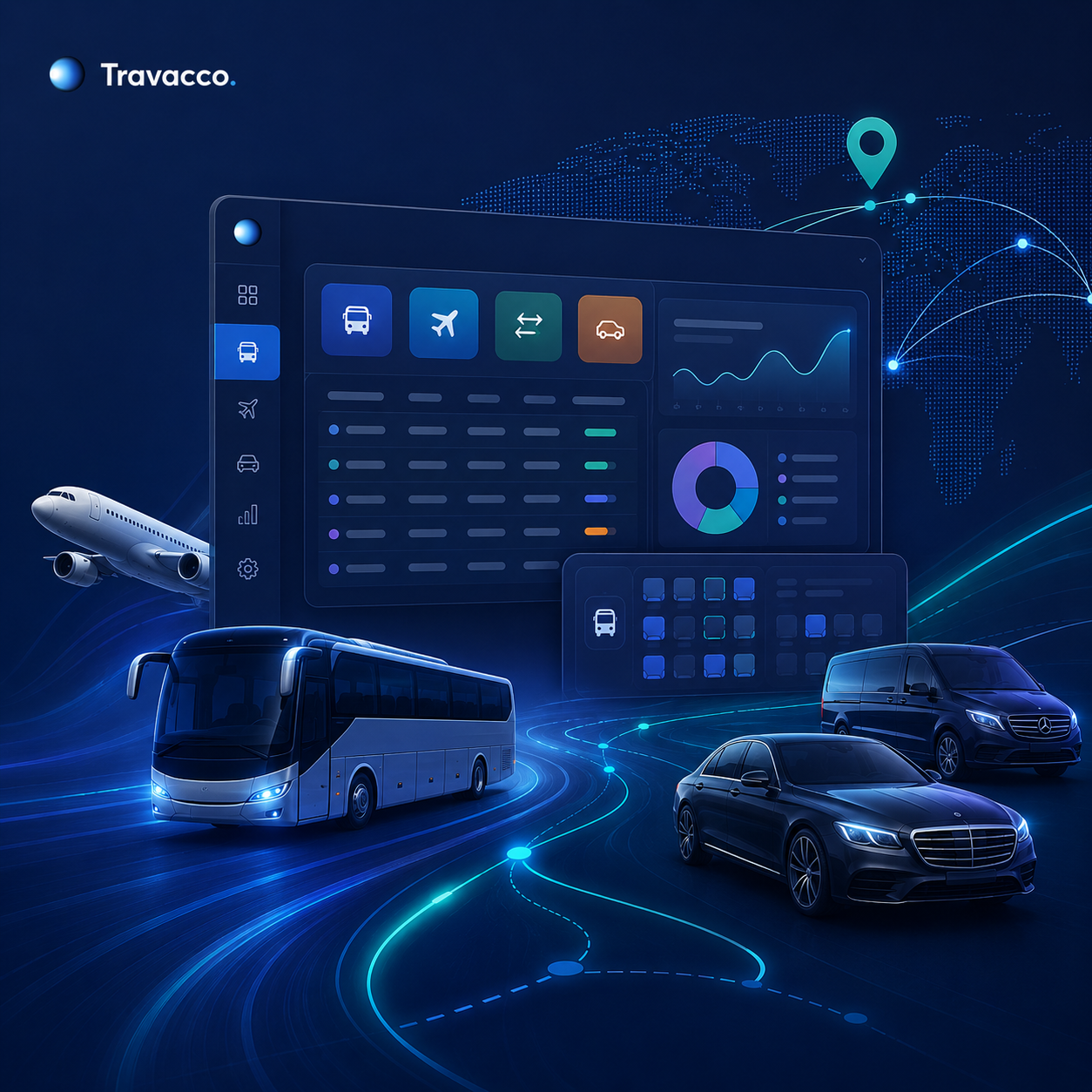
The functionality supports multiple transportation models, including bus trips, flight-related transportation services, private transfers, and car rental operations, allowing companies to manage different types of transport activity within the same environment.
Instead of treating transportation as a separate part of the business, Travacco connects it with a wider operational workflow where sales, customers, reservations, pricing, passenger information, and financial performance can be monitored more efficiently.
Why Transportation Inventory Management Matters
Selling transportation is not only about creating a route and receiving a reservation.
Behind every transport booking, there are several operational questions:
- How many seats are available?
- Which seats have already been sold?
- Who are the passengers?
- What is the total sales amount?
- What is the supplier cost?
- Which reservations have been confirmed?
- Which bookings are still pending?
- What documents are required?
- Which payment conditions apply?
- How profitable is the trip?
When these questions are answered through different systems, companies often spend unnecessary time checking, comparing, and updating information manually.
Transportation Inventory helps create a more structured operational environment.
Instead of maintaining separate records for routes, customers, seats, prices, and payments, businesses can manage these processes through a single system.
This becomes especially important as booking volume increases.
A few reservations may be manageable manually. Hundreds of bookings across several routes, channels, and transport types require a much more organized approach.
Manage Different Transportation Types in One System
One of the strengths of Travacco Transportation Inventory is its ability to support different transport models.
The system allows companies to organize services such as:
- Bus trips
- Flight trips
- Private transfers
- Car rentals
Each of these services has a different operational logic.
A scheduled bus trip may require seat selection and passenger lists.
A private transfer may be sold as a vehicle-based service rather than by individual seats.
A car rental service may depend on vehicle and day-based pricing.
Because of these differences, transportation software needs flexibility.
Travacco allows companies to select the relevant transportation type while creating the service so that the operational setup can match the actual business model.
This makes the module suitable for businesses that manage more than one type of transportation activity.
A Step-by-Step Transportation Setup Process
Transportation services often contain many operational details, which makes structured configuration particularly important.
Travacco organizes the setup process into several stages so companies can define the main elements of a transportation product before it becomes part of their sales operation.
The setup includes sections such as:
- Trip Information
- Seat Map
- Cost & Pricing
- Rules & Add-ons
- Passenger Questions
- Document Settings
- Payment Settings
Each stage focuses on a different operational component.
This step-by-step structure helps companies build transportation services in a more organized way rather than entering disconnected information across multiple places.
Define the Transportation Type and Sales Logic
The first step is defining the basic transportation model.
Within the trip information section, companies can determine the transportation type and sales logic.
For example, when managing a bus service, the company can select a seat-based route sales model.
This allows individual seats to become part of the inventory.
Alternatively, the transport may follow another sales model depending on the type of service being offered.
Travacco also distinguishes between different transport categories such as bus trips, flight trips, private transfers, and car rentals.
This distinction is important because the way a seat-based bus service is sold is different from the way a private transfer or rental vehicle is managed.
By defining the model at the beginning, the company creates a clearer operational structure for the rest of the booking process.
Seat Map and Capacity Management
Capacity is one of the most important factors in transportation sales.
A company needs to know exactly how many seats are available, how many have already been sold, and which passengers are connected to specific seats.
Without structured inventory management, this information may be stored in separate files or manually updated after each booking.
That approach becomes risky when several employees are working on the same route.
Travacco’s Seat Map functionality helps companies organize seat-based transportation inventory inside the system.
For routes where seat selection is relevant, businesses can manage seating arrangements as part of the transportation setup.
This improves operational visibility.
Instead of simply seeing that a booking exists, teams can see which seats are connected with the reservation and how many passengers are included in the booking.
For scheduled transportation services, this information is essential both before and during departure preparation.
Cost and Pricing Management
Transportation sales should not be evaluated only by revenue.
A route can generate strong sales while still producing weak profitability if its operating or supplier costs are high.
Travacco includes a dedicated Cost & Pricing stage that allows businesses to structure the financial side of the transportation service.
Companies can define pricing-related information before the transportation product is sold.
This helps connect operational planning with financial performance.
For example, a company can evaluate not only how much has been sold but also how that revenue relates to the cost of delivering the service.
This is particularly valuable for businesses operating multiple routes or purchasing transport services from external suppliers.
Pricing and cost visibility provide management with a clearer understanding of which transportation products are performing effectively.
Rules and Additional Services
Transportation products may include different rules depending on the type of journey.
Certain services may have specific conditions related to booking, passenger requirements, additional services, or operational limitations.
Travacco provides a dedicated Rules & Add-ons section where these elements can be configured as part of the transportation product.
This gives businesses greater flexibility when building transport services.
Instead of applying identical conditions to every booking, companies can define information that reflects the requirements of a particular service.
Additional services can also become part of the structured booking environment rather than being communicated separately through messages or manual notes.
The result is a more complete transportation product with clearer operational conditions.
Passenger Information Collection
Passenger information is another critical part of transport operations.
Depending on the service, companies may need more information than simply a customer name and phone number.
Travacco includes a Passenger Questions section that allows businesses to structure the information they need to collect from passengers.
This can simplify the reservation process by reducing the need to contact customers after the booking to request missing information.
Collecting passenger details within the booking flow also helps keep operational information connected to the original reservation.
For companies managing group transportation or seat-based journeys, centralized passenger information can significantly improve departure preparation.
Document Settings
Transportation services frequently require documents related to passengers, bookings, tickets, vouchers, or service confirmation.
Managing these documents separately can create unnecessary administrative work.
Travacco includes Document Settings as part of the transportation configuration process.
This allows companies to include document-related requirements within the same workflow used to create and manage the transport service.
The important advantage is centralization.
Instead of treating documents as an external process, businesses can incorporate document management into the broader transportation workflow.
This helps make the service more structured from the moment it is created.
Payment Settings
Payment conditions are closely connected with transportation sales.
Different services may require different payment structures or booking conditions.
Travacco provides a dedicated Payment Settings section where payment-related configuration can become part of the transportation product.
By including payment settings in the same process as route, pricing, seat, and passenger management, the platform helps create a more complete operational flow.
The company does not need to think about transportation sales and payment management as entirely separate processes.
They become connected parts of the same service.
Centralized Transportation Reservations
After a transportation service has been created and bookings begin to arrive, the next challenge is reservation management.
Travacco provides a centralized transportation inventory interface where companies can monitor transport reservations from one place.
The reservation view can display key information including:
- Reservation number
- Customer
- Transport route
- Transportation type
- Selected seats
- Passenger count
- Booking amount
- Reservation status
Having this information in one view makes daily operations significantly easier.
Employees do not need to open several files to understand the details of a booking.
A single screen provides a structured overview of the most important reservation information.
For companies with high booking volumes, this can improve both speed and accuracy.
Search and Filter Reservations More Efficiently
Finding a specific booking can become difficult once a company manages a large number of reservations.
Travacco includes search and filtering options that help teams find relevant transportation bookings faster.
The search field can be used to identify reservations through information such as:
customer name, phone number, email address, or reservation number.
Reservations can also be filtered based on criteria such as:
- Status
- Sales channel
- Transportation type
This is especially useful for operations teams that need to focus on a specific group of reservations.
For example, a company may want to view only pending bookings, only bus reservations, or only bookings received through a particular channel.
Instead of reviewing the full reservation list manually, employees can narrow the information to what they need.
Reservation Status Monitoring
A transportation operation contains bookings at different stages.
Some reservations may already be confirmed.
Others may still be pending.
Some may have expired or been cancelled.
Travacco provides summary indicators that help teams understand the current booking situation.
The interface can show categories such as:
- Total Orders
- Confirmed
- Pending
- Expired / Cancelled
This makes reservation follow-up easier.
Rather than checking every booking individually, operations teams can immediately identify whether there are reservations requiring attention.
This type of status visibility is particularly useful in high-volume transport operations where missing one pending reservation could create operational problems later.
Export Passenger Manifests
Passenger manifests are essential in many transportation operations.
Bus trips, group transportation, shuttle services, and similar activities often require a structured list of passengers before departure.
Preparing this list manually creates additional work and may increase the possibility of errors.
Travacco includes a Manifest Export function that allows businesses to export passenger-related booking information directly from the transportation inventory.
Because the manifest is based on existing reservation data, teams can reduce duplicate data entry.
This makes departure preparation more efficient and keeps passenger information connected with the original booking records.
Transportation Dashboard and Statistics
Managing reservations is important, but management teams also need a higher-level view of business performance.
Travacco includes an Administration Panel & Statistics area dedicated to transportation activity.
The dashboard can provide important indicators such as:
Expected Revenue
The company can monitor the revenue expected from transportation operations.
Supplier Cost
Businesses can track costs related to transport suppliers or service delivery.
Active Trips
The number of active transportation services can be viewed directly from the dashboard.
Total Sold
Companies can monitor how much transportation inventory has already been sold.
Pending
Pending bookings can be identified more easily.
Available Seats
Remaining or unsold capacity becomes visible.
Net Profit
Businesses can view the financial result of transportation operations by comparing sales and related costs.
These indicators give decision-makers a more complete view of performance.
A company can move beyond simply asking, “How many tickets did we sell?”
Instead, management can evaluate:
- How much did we sell?
- How much capacity is still available?
- What did the service cost?
- How much revenue is expected?
- What is the resulting net profit?
These are much more valuable questions when evaluating business performance.
Supporting B2B and B2C Transportation Operations
Travel and transportation companies often sell through different channels.
Some services are sold directly to individual travelers.
Others are sold through partner agencies, corporate clients, tour operators, or other businesses.
Travacco Transportation Inventory is designed for both B2B and B2C transportation operations.
This gives companies the flexibility to manage different types of customers and sales activity while keeping the transportation inventory centralized.
For a growing travel company, this is particularly important.
As sales channels increase, fragmented systems become more difficult to manage.
A centralized transportation environment provides clearer operational control regardless of where the booking originates.
From Service Creation to Business Performance
The main value of Transportation Inventory is not one individual feature.
Its value comes from connecting the full transportation workflow.
A company can move through the process in a structured sequence:
Create the transport service → choose the transport type → define the sales model → configure seats → set cost and pricing → add rules and services → collect passenger information → define document requirements → configure payments → receive bookings → monitor reservations → export manifests → analyze results.
This creates a more connected operational process.
Instead of maintaining separate systems for booking, passenger lists, seat availability, pricing, and financial analysis, businesses can manage these elements within the same environment.
A More Connected Transportation Workflow with Travacco
The new Transportation Inventory functionality expands Travacco’s role as a centralized travel management platform.
Transportation no longer needs to exist as an isolated operational process.
It can become part of a broader ecosystem where customer information, sales activity, operational management, financial processes, and reporting are connected.
For travel agencies, tour operators, transportation providers, and businesses managing passenger transport, this provides a more structured way to organize daily operations.
The goal is not simply to store transportation data.
The goal is to make that data easier to manage, easier to access, and more useful for decision-making.
Transportation operations involve many moving parts.
A single trip may require route planning, seat inventory, passenger information, pricing, costs, payment configuration, documents, booking statuses, and financial reporting.
Managing each of these elements separately can create unnecessary complexity.
Travacco’s new Transportation Inventory functionality brings these processes together.
From creating bus routes and configuring seat maps to managing private transfers, passenger bookings, manifests, pricing, and transport statistics, companies can manage a more complete transportation workflow from one centralized platform.
For businesses that want greater control over transportation sales and operations, the new functionality provides a structured system for managing both day-to-day processes and overall performance.
With Travacco Transportation Inventory, transportation becomes more than a booking record.
It becomes a connected, measurable, and manageable part of the entire travel business.