
Tour Management Software for Travel Agencies: From Booking to Operation
Running a tour is much more than selling a package and confirming a reservation. Behind every successful tour, travel agencies need to coordinate bookings, passengers, suppliers, transport, payments, documents, schedules, and operational details. As the number of tours and customers grows, managing these processes manually can quickly become complicated.
Many travel agencies still rely on Excel spreadsheets, emails, messaging applications, and separate systems to manage different parts of their tour operations. While these methods may work for a small number of bookings, they can create unnecessary workload and increase the risk of missed information as the business expands.
A centralized tour management system for travel agencies can bring these operations together and give teams a clearer view of every tour, booking, and transaction.
Why Tour Management Becomes More Difficult as a Travel Agency Grows
Managing a few tours manually may seem simple. An employee can create a spreadsheet, add passenger details, contact suppliers through messaging apps, and keep payment information in another file.
The challenge begins when the agency handles dozens or hundreds of bookings simultaneously.
A single tour may include:
- Multiple passengers
- Different booking dates
- Transportation arrangements
- Pickup and drop-off points
- Hotel or service suppliers
- B2C and B2B customers
- Customer payments
- Supplier costs
- Commissions
- Refunds
- Invoices and other documents
When this information is stored in different places, employees have to spend more time searching for information and updating records. A change to one booking may also require updates in several different files or conversations.
This is where tour management software becomes valuable. Instead of treating every operational task as a separate process, the agency can connect them within one centralized system.
What Is Tour Management Software?
Tour management software is a system designed to help travel agencies organize and manage the operational processes behind tours.
The purpose is not simply to create a tour package. A complete solution should help the agency manage the tour from the moment it is created through booking, passenger management, transportation, supplier coordination, payments, and operational follow-up.
For travel agencies, this means having important tour information available in one place rather than searching through spreadsheets, emails, and messaging conversations.
A centralized system can provide employees with a clearer overview of what is happening with each tour and each booking.
Create and Manage Tours in One Place
The first step in managing a tour is creating its operational structure.
Travel agencies need to define the details of a tour, organize its services, and make the information accessible to the employees responsible for sales and operations.
A centralized travel agency tour management system can help teams organize tour information without maintaining separate files for every product.
Instead of creating a new spreadsheet every time a tour is launched, employees can work with structured information inside the system.
This creates a more consistent workflow and makes it easier to find a specific tour, review its details, and manage related bookings.
Manage Passengers and Bookings Efficiently
A tour is ultimately connected to the people who are travelling.
Passenger information needs to be accurate and accessible to the employees responsible for the booking and operation. Depending on the tour, the agency may need to manage names, contact details, travel information, documents, and booking details for multiple passengers.
When passenger information is spread across different spreadsheets or messaging conversations, finding the correct information can take time.
With centralized tour management, passenger and booking information can be connected to the relevant tour. Employees can therefore work with the booking record instead of searching through different sources.
This becomes especially important when one tour contains multiple customers or when the same customer books different trips over time.
Connect B2C and B2B Tour Sales
Travel agencies often work with both direct customers and business partners.
A B2C booking may come directly from an individual traveller, while a B2B booking can be created by another travel agency or business partner. These sales can involve different prices, commissions, payment structures, and operational requirements.
Managing these bookings separately can make reporting and operational follow-up more difficult.
A centralized system allows agencies to manage different sales channels while keeping the underlying tour operation organized.
For B2B bookings, agencies may also need to track commissions and partner-related transactions. Having this information connected to the booking provides better visibility into the financial side of the tour.
Manage Transport and Transfer Operations
Transportation is one of the operational areas where small details can have a major impact.
A tour may require airport transfers, private transfers, group transportation, or specific pickup and drop-off arrangements. Employees need to know when the service takes place, where passengers should be collected, and which vehicle or transport resource is assigned.
Without a structured system, this information can easily become buried in messages or separate operational files.
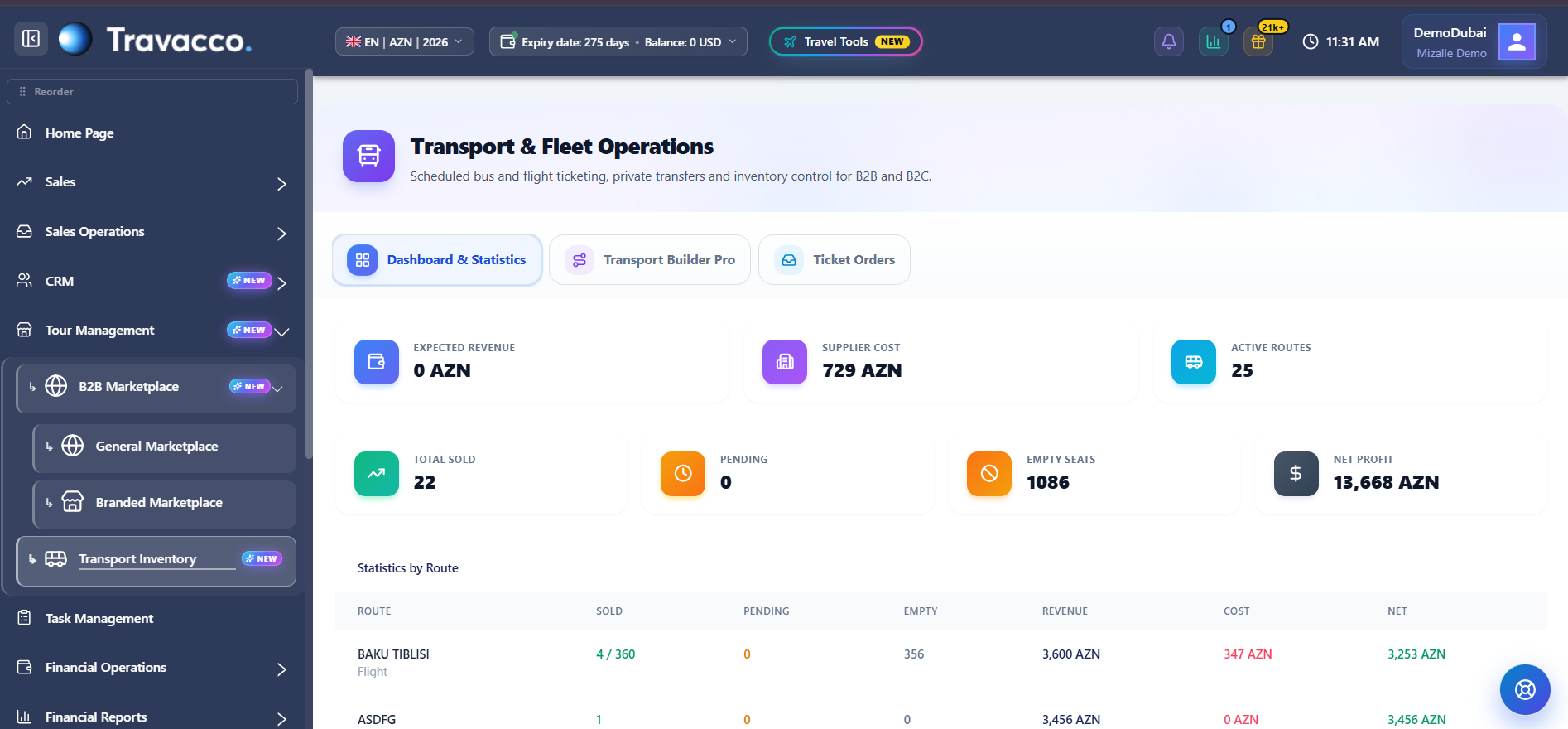
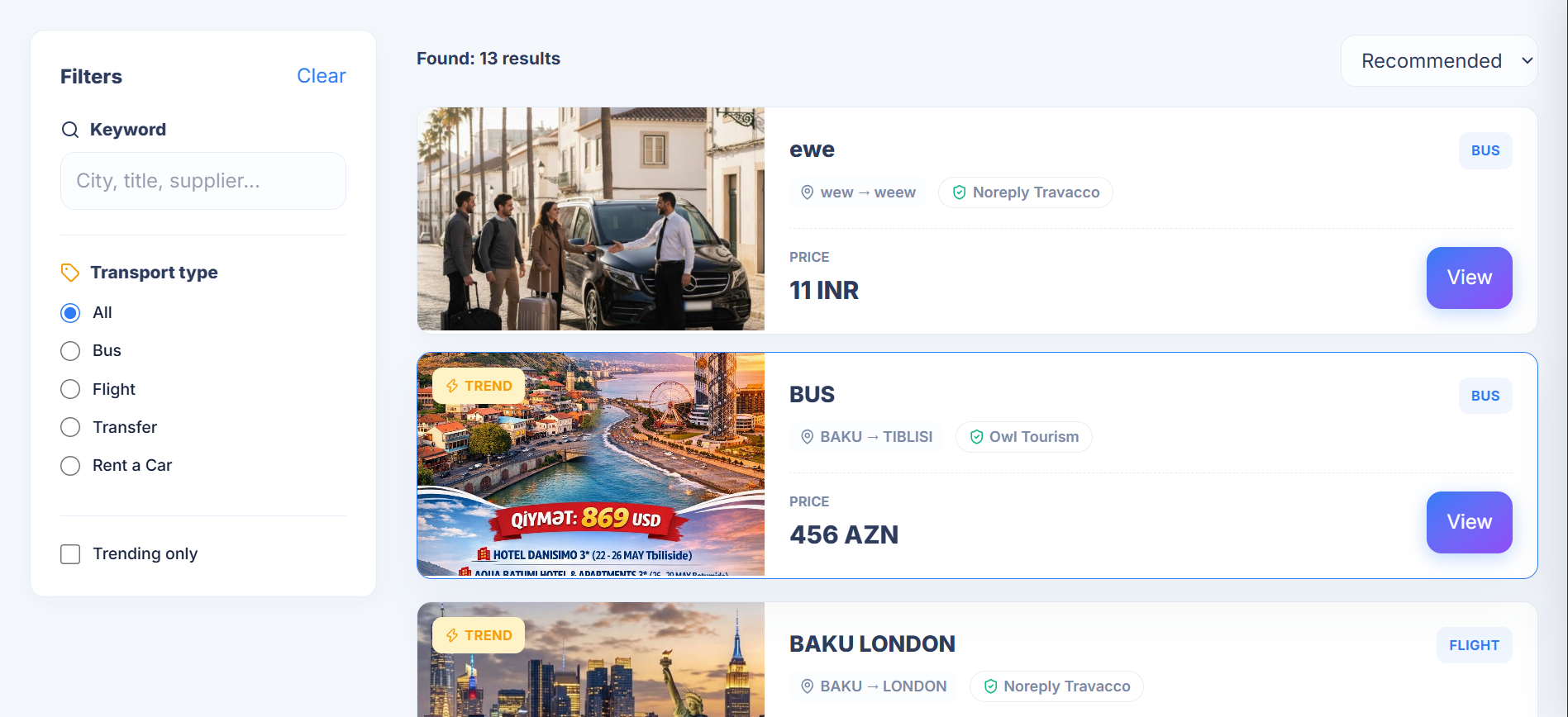
Tour management software can connect transportation details with the relevant tour and booking. This gives the operations team a more organized way to manage transport-related information.
For agencies managing their own vehicles or multiple transport services, connecting tour operations with fleet and transportation management can also reduce duplication and make daily operations easier to coordinate.
Keep Supplier Information Connected to the Tour
Travel agencies rarely operate every part of a tour themselves. Hotels, transport providers, local operators, guides, and other suppliers may be involved in delivering the final service.
This means the agency needs to know not only what the customer paid, but also what the agency owes to its suppliers.
Keeping supplier information separate from the booking can make it difficult to understand the real financial position of a tour.
A centralized system can connect supplier costs and related transactions with the tour and booking. This creates a clearer picture of the relationship between customer revenue and operational expenses.
Track Customer Payments and Financial Operations
Selling a tour does not automatically mean the agency has received the full amount.
Customers may make advance payments, partial payments, or complete payments at different stages of the booking. Refunds may also need to be processed.
At the same time, the agency may have outstanding payments to suppliers.
This makes financial tracking an important part of tour management.
A centralized system can help travel agencies monitor:
- Customer income
- Advance payments
- Outstanding balances
- Refunds
- Supplier payments
- Invoices
- Customer contracts
- Tour-related financial results
When financial data is connected to operational data, managers can see more than just the number of bookings. They can also understand the financial position behind those bookings.
Understand Tour Profitability
One of the most important questions for a travel agency is simple:
How much money did this tour actually make?
Revenue alone does not answer this question.
An agency may generate significant sales while spending heavily on suppliers, transportation, commissions, refunds, and other operational costs.
To understand profitability, agencies need to compare income with the costs associated with delivering the service.
A centralized tour management solution can make this process easier by connecting sales and financial information with operational records.
Instead of calculating profitability manually across several spreadsheets, managers can work with centralized data and gain better visibility into revenue, costs, and financial results.
This helps agencies identify which tours perform well and where operational costs may need closer attention.
Reduce Manual Work Across the Team
Tour operations involve many repetitive tasks.
Employees may need to enter the same customer information into different files, search for booking details, update payment records, send documents, and communicate operational changes to other team members.
Every additional manual step creates another opportunity for an error.
By centralizing information, a tour management system for travel agencies can reduce unnecessary data entry and make information easier to access.
The benefit is not only saving time. Employees can spend more time on customer communication, sales, and solving operational issues instead of constantly maintaining spreadsheets.
Give Managers Better Operational Visibility
Managers need a different level of visibility from individual employees.
An operations employee may need to know the pickup location for a specific passenger. A sales employee may need to check the booking status. A manager may want to understand the total number of bookings, revenue, outstanding payments, and operational workload.
A centralized travel management platform can bring these different perspectives together.
With structured data, managers can make decisions based on the current state of bookings and financial operations rather than relying on information collected manually from different employees.
How Travacco Supports Tour Management
Travacco brings travel agency sales, operations, customer management, and financial processes into a connected business environment.
With Travacco Tour Management, travel agencies can organize their tours and manage the operational information associated with them. Tour bookings, passenger information, services, transportation, and related processes can be managed within a centralized platform.
The system also connects tour operations with other areas of the travel agency business.
For example, customer information can be managed through CRM, financial transactions can be followed through Finance & Sales, and transportation-related operations can be connected with the agency's broader operational workflow.
This creates a more connected process instead of forcing employees to manage each part of the business separately.
The advantage becomes particularly important as an agency grows. More customers, more tours, more suppliers, and more bookings naturally create more operational complexity. A centralized platform helps the agency manage that complexity without continuously adding more spreadsheets and manual processes.
From Tour Sales to Daily Operations
Effective tour management does not end when a customer makes a booking.
The booking must be connected to the passenger, services, transportation, supplier, documents, payments, and operational schedule. Each of these elements contributes to the final customer experience and the agency's financial result.
When these processes are disconnected, employees spend time moving information from one place to another.
When they are connected, the agency can create a more structured workflow.
This is the main value of modern tour management software: not simply replacing Excel, but connecting the operational and financial processes that make a tour possible.
Tour management becomes increasingly complex as travel agencies expand their product range, customer base, and partner network. Managing tours through spreadsheets, messaging applications, and disconnected files can make it difficult to maintain accurate information and understand the real financial result of each booking.
A centralized tour management system for travel agencies provides a more structured approach. It can connect tour creation, passenger management, bookings, B2C and B2B sales, transportation, suppliers, payments, documents, and profitability within one environment.
For growing travel agencies, the goal is not simply to manage more tours. It is to manage them with greater visibility, fewer manual processes, and better control over every operational and financial step.
With Travacco, travel agencies can bring these processes together and build a more organized workflow from booking to operation and from operation to financial result.