
The Rise of Self-Service Travel: What Modern Customers Expect
A New Era of Customer Expectations
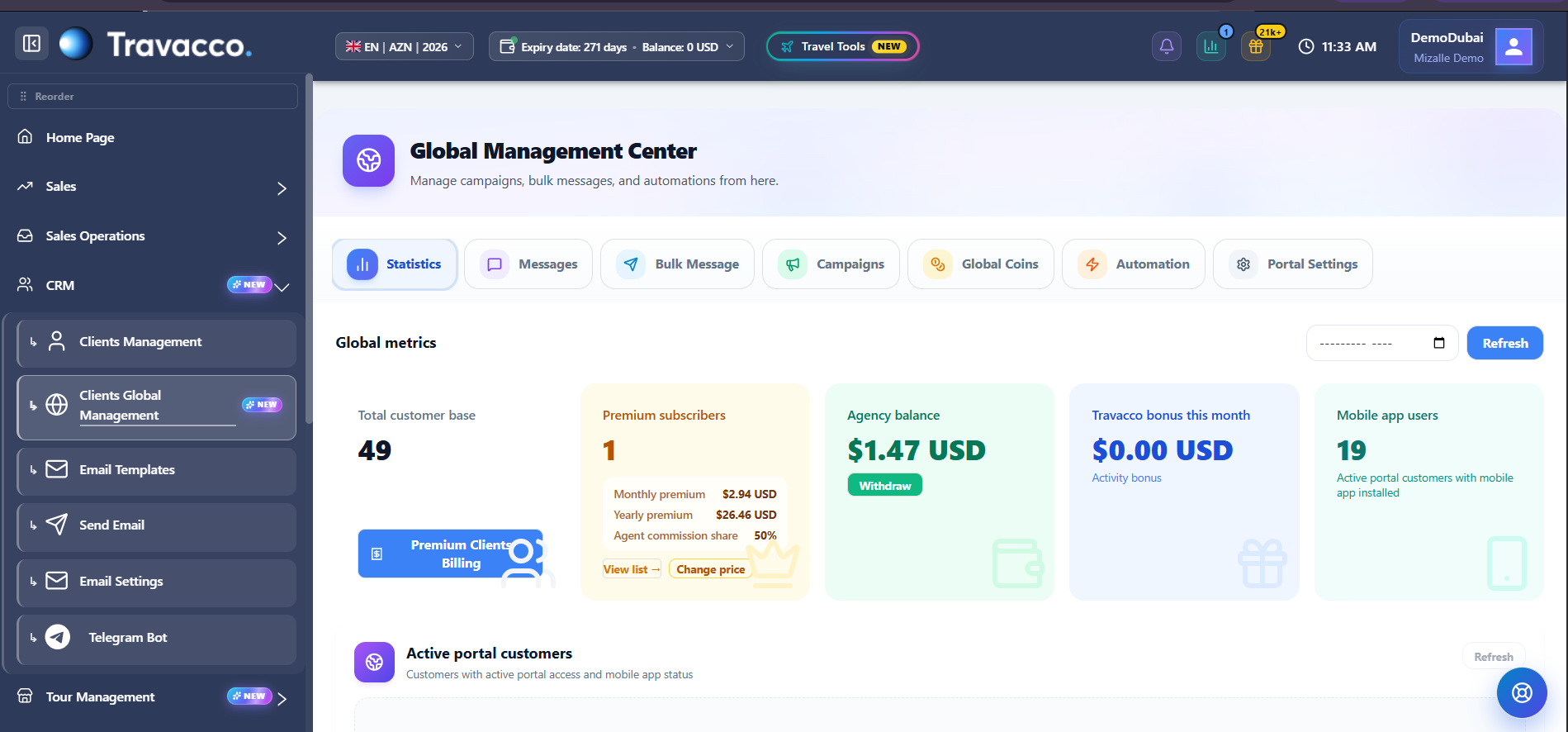
Travel planning has changed significantly over the years. Travelers once depended almost entirely on travel agents to confirm reservations, receive tickets, obtain travel documents, and check payment details. Today, digital technology has transformed how people interact with businesses, and the travel industry is no exception.
Customers can research destinations, compare accommodation options, book flights, and organize entire trips through digital platforms. As a result, their expectations have evolved. They increasingly want convenient access to their travel information without having to contact an agency every time they need an update.
This shift has contributed to the rise of self-service travel, an approach that allows travelers to access relevant information and manage certain parts of their travel experience independently through digital tools.
For travel agencies, this development presents both an opportunity and a challenge. Customers still value professional advice, personalized recommendations, and human support when problems arise. However, they also expect routine information to be readily available.
The question is no longer simply whether a travel agency can provide excellent service. It is also whether customers can access that service conveniently, even when an agent is not immediately available.
This is where digital customer portals become valuable. With solutions such as the Travacco Client Portal, travel agencies can give customers a dedicated place to access important trip information, review payment details, find documents, and stay connected with their agency.
Understanding this shift is essential for travel businesses that want to improve customer experience while making their daily operations more efficient.
1. What Is Self-Service Travel?
Self-service travel refers to digital tools and processes that allow travelers to access information or complete selected tasks independently, without requiring direct assistance from a travel agent for every request.
It does not mean eliminating travel agents from the customer journey. Instead, it gives travelers greater control over routine interactions while allowing agents to focus on tasks that require expertise, communication, and personal attention.
Depending on the platform, self-service capabilities may include:
- Viewing booking confirmations and reservation details.
- Accessing flight tickets and travel documents.
- Reviewing payment records and outstanding balances.
- Checking itinerary information and transportation arrangements.
- Receiving updates from a travel agency.
- Finding answers to common questions through a digital support channel.
For example, imagine a customer who has booked an international trip and wants to check the flight departure time late in the evening. Without a centralized digital platform, the customer may need to search through emails, messaging applications, or previously received documents.
With a customer portal, the relevant information can be available in one place, provided the agency has entered and maintained the necessary details.
The difference may seem small, but repeated across dozens or hundreds of customers, convenient access can significantly improve the overall service experience.
2. Why Do Modern Travelers Want More Control?
Instant Access to Information
Customers are accustomed to accessing information digitally in many areas of everyday life. They can track deliveries, review financial transactions, manage appointments, and receive booking confirmations through online platforms.
Travel is becoming part of the same digital environment.
When customers have already paid for a trip, they naturally want to know its current status. They may need to check whether a payment has been recorded, locate a ticket, or confirm the details of an upcoming reservation.
Having to contact an agent for every basic question can create unnecessary friction, especially when the information already exists in the agency's systems.
Self-service tools help bridge this gap by making relevant information accessible through a dedicated digital channel.
Convenience Beyond Business Hours
Travel questions do not always arise during office hours. A customer might want to review a booking after work, check a document before leaving home, or confirm travel arrangements during the weekend.
A digital portal can make stored information accessible outside an agency's normal working hours, as long as the customer has an internet connection and the service is available.
This does not mean every issue can be resolved without assistance. Complicated booking changes, cancellations, emergencies, and supplier-related problems may still require direct communication.
However, customers should not necessarily need to wait for an agent simply to retrieve information that is already available.
Greater Transparency
Customers want clarity about their purchases, particularly when travel arrangements involve multiple services, payment stages, or documents.
When booking information and payment details are scattered across different messages and files, it may be difficult to understand the complete picture.
A centralized customer portal can make relevant information easier to find. Customers can review the details made available to them and better understand their travel arrangements without relying entirely on previous conversations.
For agencies, this also creates an opportunity to establish clearer communication and reduce misunderstandings caused by outdated messages or misplaced documents.
A More Independent Travel Experience
Modern travelers want to participate actively in managing their trips. They may prefer to check their own information before asking questions or contacting an agent.
Providing this independence does not reduce the importance of personal service. In fact, it can improve the relationship between the customer and the agency by making routine interactions simpler and allowing more meaningful conversations to take priority.
The goal is to give customers control over information while preserving professional support whenever they need it.
3. The Hidden Challenges of Traditional Customer Communication
Many travel agencies manage customer relationships through a combination of email, phone calls, messaging applications, spreadsheets, and booking systems.
These channels can be useful, but relying on them as the only way to share information may create operational challenges.
Repeated Questions Take Up Valuable Time
Consider a travel agency handling dozens of active bookings. Customers may regularly ask for copies of tickets, confirmation of payments, hotel details, or updates about their upcoming trips.
Each question may take only a few minutes to answer. However, when similar requests arrive throughout the day, they interrupt other tasks and reduce the time available for sales, itinerary planning, supplier communication, and customer acquisition.
A portal that provides access to commonly requested information can reduce some of these repetitive interactions.
Information Becomes Difficult to Track
When information is shared across several communication channels, customers may struggle to remember where a particular document or confirmation was sent.
Agents may face a similar problem when trying to identify an earlier conversation or determine whether the latest version of a document has been shared.
Centralizing relevant customer information helps create a more organized experience. Rather than searching through multiple conversations, customers have a dedicated place to look for the information made available by their agency.
Customer Service Becomes Dependent on Individual Availability
If every routine question requires a particular employee to respond, service can slow down when that employee is busy, unavailable, or handling a more complicated request.
Digital self-service can reduce this dependency for basic information retrieval. Customers can independently access available records while employees focus on issues that genuinely require their attention.
Importantly, this works best when the agency maintains accurate records and clearly communicates which information is available through the portal.
4. What Should a Modern Travel Customer Portal Include?
Not every digital portal offers the same capabilities. A useful customer portal should be designed around the questions travelers ask most frequently and the information they need throughout their journey.
Travel Details and Reservations
Customers should have a convenient way to review information related to their trips.
Depending on the services booked and the information recorded by the agency, this may include itinerary details, reservation information, flight schedules, booking references, and other relevant travel arrangements.
A centralized view makes it easier to revisit important details without searching through old conversations.
Travel Documents and Tickets
Travel documents are among the most important pieces of information customers need before departure.
A portal can provide access to available documents and ticket details, helping customers locate the information they need when preparing for a journey.
For flight bookings, relevant details may include departure times, booking references, baggage information, and seat details when those details are available in the agency's records.
The value comes from having these details organized in a dedicated space rather than scattered across separate messages.
Payment Information and Outstanding Balances
Financial clarity is another important part of the travel experience.
Customers may need to understand how much they have paid, whether a balance remains, or what amount is still due for a booking.
A customer portal can make recorded debt and payment information easier to review. This can reduce uncertainty and give customers a clearer understanding of their financial obligations.
For agencies, better visibility can also reduce routine payment-related inquiries. The information must, of course, be kept accurate and updated as transactions are recorded.
Transportation and Additional Arrangements
A trip often involves more than flights and accommodation. Travelers may also need information about transfers, transportation arrangements, and other services connected to their booking.
When these details are available through a centralized portal, customers have a more convenient way to review their arrangements.
This becomes particularly useful for trips involving multiple services or several stages of travel.
Communication and Customer Support
Self-service should not mean leaving customers alone when they need help.
A well-designed digital experience should make it easy to identify the right channel for questions, requests, or follow-up communication.
Messaging features, notifications, or other support options can help maintain the connection between customers and their agency.
The ideal approach combines independent access to information with human assistance when a situation requires professional judgment.
5. How Travacco Client Portal Supports the Modern Travel Experience
For travel agencies, delivering a convenient digital experience requires more than sending customers a collection of links and documents. It requires an organized way to make relevant travel information available.
Travacco Client Portal is designed to connect travel agencies with their customers through a dedicated digital environment where customers can access key information related to their trips.
Instead of depending exclusively on previous messages or contacting an employee for every routine question, customers can use the portal to review the information made available to them by their agency.
Its available sections support several important parts of the customer journey.
My Trips: Travel Information in One Place
The My Trips section brings together relevant information about a customer's travel arrangements.
Customers can access trip-related details and available documents, including ticket information such as flight times, booking references, baggage details, and seat information when recorded for the booking.
This creates a more organized way to revisit travel details before departure.
For the agency, making trip information accessible through a dedicated portal can reduce the need to resend the same documents or manually answer repeated questions about existing bookings.
Debt and Payments: Clearer Financial Information
Payment questions are a common part of travel agency operations. Customers may want to check outstanding balances or understand the current status of their payments.
Through the portal's debt and payment section, customers can review the relevant financial information available to them.
This improves visibility into the financial side of a booking and can help reduce uncertainty during the period between reservation and departure.
It also gives agency employees an opportunity to spend less time responding to routine balance inquiries and more time managing financial operations, customer relationships, and new sales.
Documents: Easier Access to Important Files
Customers need access to important travel documents at different stages of their journey, from the preparation period to departure.
Travacco Client Portal provides a dedicated area for available documents, helping customers find relevant information without relying entirely on their message history.
Keeping documents accessible in an organized digital environment can make the preparation process more convenient for customers and simplify document sharing for travel agencies.
Transport and Reservations: Better Visibility Into Arrangements
Travel plans can involve several connected arrangements. A customer might need to review reservation information alongside transportation details before the trip.
The portal includes sections for transport and reservations, providing a dedicated place for relevant information associated with these services.
This is particularly useful when customers need to revisit arrangements after the initial booking rather than search through separate conversations.
Messages and Campaigns: Maintaining the Customer Connection
Self-service is only one part of a strong digital customer experience. Communication and ongoing engagement remain important.
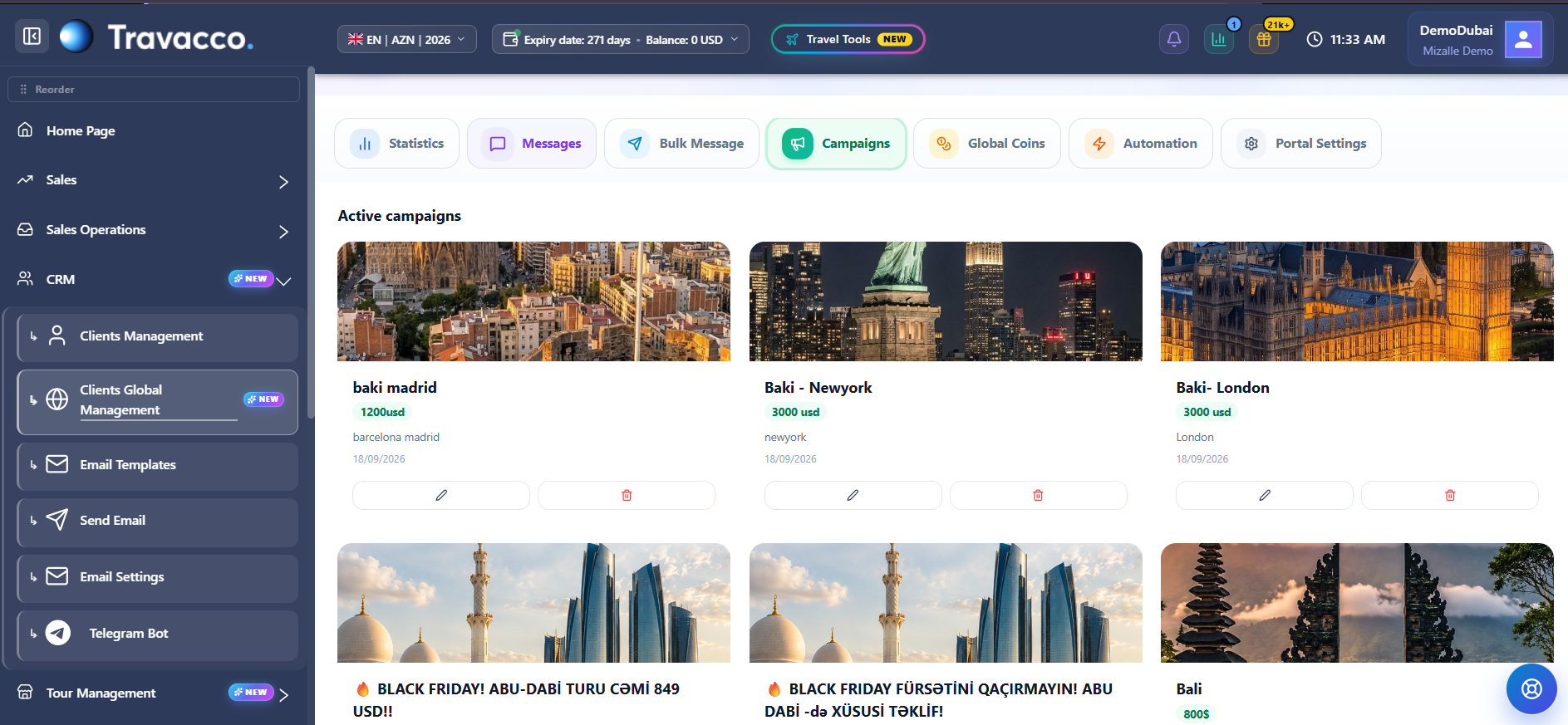
Travacco Client Portal also includes messages and campaigns sections, supporting communication and access to relevant agency information within the customer-facing environment.
These capabilities complement the portal's informational functions. Customers can have a more structured digital connection with their agency, while businesses can support engagement beyond the moment when a reservation is first made.
A Digital Extension of the Travel Agency
The Client Portal should not be viewed simply as a place to store files. It represents an additional digital touchpoint between the agency and its customers.
By bringing travel-related information into a dedicated environment, Travacco helps agencies support a more organized customer experience while maintaining the professional relationship that makes travel agents valuable.
The portal works alongside the agency's broader operational processes. Its effectiveness depends on the quality of the underlying booking information, how consistently records are updated, and how clearly customers are guided through the available features.
6. The Business Benefits of Self-Service for Travel Agencies
The advantages of self-service extend beyond customer convenience. When implemented thoughtfully, it can support more efficient operations and a better use of staff time.
Less Time Spent on Repetitive Requests
Employees regularly handle requests for information that has already been recorded or shared.
Providing customers with direct access to relevant details can reduce some of these repetitive interactions. The time saved can then be redirected toward personalized recommendations, complex itineraries, supplier coordination, and sales opportunities.
The actual impact depends on the agency's booking volume, communication practices, and the features customers actively use.
A More Consistent Customer Experience
Customers should not have to depend on which employee happens to be available to locate basic booking information.
A centralized portal offers a more consistent place to access available records. This can make the customer journey feel more organized, particularly when several employees are involved in managing the same booking.
Consistency is especially important for agencies handling many customers simultaneously.
More Opportunities for Customer Retention
Customer relationships do not end when a booking is confirmed.
Travelers may need support before departure, during trip preparation, and after returning home. Providing convenient access to travel information can help create a smoother experience across these stages.
A positive experience can contribute to customer satisfaction and encourage repeat business, although retention also depends on factors such as pricing, service quality, reliability, and the suitability of the travel arrangements.
Digital convenience is therefore one part of a broader customer retention strategy.
More Room to Focus on High-Value Work
Travel agents bring expertise that automated information access cannot replace.
They help customers compare options, select suitable destinations, manage complex requests, and navigate unexpected changes. When staff members spend less time handling routine information requests, they can dedicate more attention to these higher-value responsibilities.
The purpose of self-service is not to remove the human element from travel. It is to give professionals more room to deliver the service that customers genuinely need from them.
7. Self-Service Does Not Mean the End of Personal Service
One concern businesses may have is that digital self-service could make customer relationships feel less personal.
In practice, the result depends on how the technology is implemented.
A portal that makes information easy to find can complement personal service rather than replace it. Customers can independently check their booking details while still contacting their agent when they need advice, assistance, or a solution to a more complicated problem.
For example, a traveler checking a flight time may not need an employee's direct assistance. A traveler dealing with a cancellation, an unexpected schedule change, or a complicated rebooking request may need professional support.
These are different situations and should be handled accordingly.
Travel agencies should also avoid assuming that every customer prefers a fully digital experience. Some travelers appreciate direct communication and personal guidance, while others prefer to handle routine tasks independently.
A balanced approach gives customers convenient digital access without making human assistance difficult to obtain.
The strongest customer experience combines accessible information, reliable processes, and responsive personal support.
8. How Travel Agencies Can Introduce Self-Service Successfully
Adopting a customer portal is only one step. Agencies should also consider how the tool fits into their existing workflows and how customers will use it.
Keep information accurate. A portal is useful only when the information available to customers is reliable. Agencies should maintain booking records and update relevant details when changes occur.
Explain the available features. Customers may not immediately know where to find their tickets, documents, or payment information. A short introduction can help them understand how to use the portal.
Make it part of the customer journey. Agencies can introduce the portal during booking confirmation and remind customers where they can access their travel information later.
Preserve direct support. Customers should know how to contact the agency when they encounter a problem that cannot be resolved by viewing information online.
Review customer feedback. Agencies can ask which information customers search for most often and use that feedback to improve their communication processes.
Measure the operational impact. Businesses can monitor recurring inquiries, response times, customer feedback, and portal adoption to understand whether the new approach is delivering practical value.
These steps help transform self-service from an additional digital feature into a useful part of everyday customer service.
Conclusion: The Future of Travel Is Convenient, Connected, and Customer-Focused
Self-service travel reflects a broader change in how customers expect to interact with businesses. Travelers increasingly value convenient access to their information, transparency throughout the booking process, and the flexibility to review important details when they need them.
For travel agencies, meeting these expectations requires a balance between digital convenience and personal expertise. Customers should be able to find routine information independently without losing access to professional guidance when circumstances become more complicated.
A dedicated client portal can support this balance by bringing relevant trip information, documents, payment details, transportation arrangements, reservations, and communication into a more organized digital environment.
With Travacco Client Portal, travel agencies have a dedicated customer-facing solution to support this approach. By making available travel information easier to access, the portal can help reduce reliance on repeated manual communication and contribute to a more organized service experience.
As travel businesses continue to adapt to changing customer expectations, the opportunity is not simply to digitize existing processes. It is to rethink how customers and agencies interact throughout the travel journey.
The agencies that approach this change thoughtfully can create a customer experience that is easier to navigate, more transparent, and better suited to the needs of modern travelers.
Want to make travel information easier for your customers to access? Explore Travacco's solutions for travel agencies at www.travacco.com and discover how a connected digital environment can support your agency's customer service and daily operations.