
From Booking to Balance: What Happens After a Sale in Travacco?
In the travel industry, closing a sale is often treated as the finish line.
A customer selects a hotel, confirms a tour package, purchases a flight, or agrees to a complete travel itinerary. The booking is confirmed, and from the outside, the transaction appears complete.
Operationally, however, this is where another journey begins.
Behind every confirmed booking is a sequence of financial, administrative, operational, and customer-related responsibilities. An invoice may need to be generated. A deposit must be recorded. Supplier obligations have to be monitored. Travel documents need to be prepared. Payments may arrive in several stages. Expenses must be registered. The traveler expects access to updated information. And management ultimately needs to know whether the booking generated real profit.
For a growing travel agency, these processes cannot remain disconnected.
A sale should not disappear into a collection of spreadsheets, messaging applications, accounting notes, folders, and individual employee records after confirmation. It should move through a structured operational cycle in which every stage is connected to the next.
This is where Travacco changes what happens after a booking.
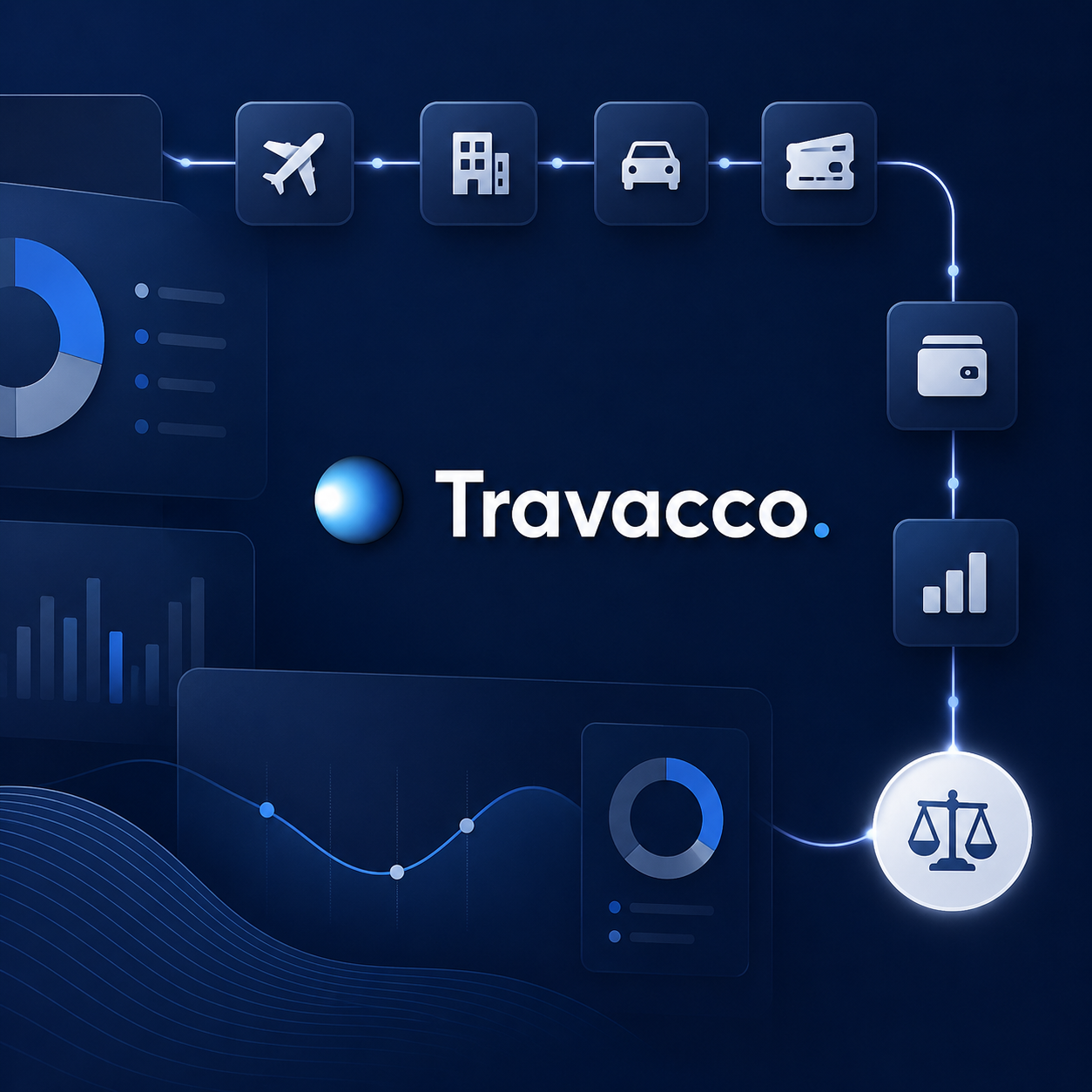
Rather than treating sales, finance, customers, suppliers, documents, and reporting as isolated activities, Travacco brings them into a centralized travel agency management environment — allowing a booking to move from confirmation to financial visibility within one connected workflow.
A Booking Is the Beginning of an Operational Cycle
Every booking creates more than revenue.
It creates responsibilities.
Consider a relatively simple travel package. A customer may purchase accommodation, airport transfer, flight tickets, an excursion, and an additional service. Each component may involve a different supplier, cost, payment condition, document, or confirmation process.
Now multiply that by dozens or hundreds of customers.
Without a centralized system, employees can quickly become responsible for checking information across multiple places: one spreadsheet for customer payments, another for supplier balances, email for confirmations, messaging applications for customer communication, folders for vouchers, and separate financial records for expenses.
The individual tasks may seem manageable.
The difficulty comes from keeping all of them connected.
Travacco approaches the booking as the starting point of a wider business process. Sales information can continue into invoicing, payments, financial operations, customer management, document delivery, and reporting instead of becoming isolated after confirmation.
The objective is not simply to record what was sold.
It is to understand and manage everything that happens because it was sold.
Step One: Turning a Sale Into a Structured Transaction
A confirmed booking contains valuable business information.
- Who is the customer?
- What services were purchased?
- What is the total selling price?
- Which suppliers are involved?
- How much has been paid?
- How much remains outstanding?
- What documents should be created?
- What financial obligations will follow?
When booking information is maintained within a structured system, it becomes usable across different operational areas.
Travacco supports multiple travel-related sales workflows, including air tickets, hotels, services, tour packages, and multi-service arrangements. Instead of building an operational process separately for every sale, agencies can manage these transactions within a centralized environment.
This becomes particularly valuable for complex trips.
A multi-service booking may include several hotels, transfers, tours, and additional arrangements. Managing every component independently increases administrative work and creates more opportunities for information to become fragmented.
Within Travacco, the objective is to maintain continuity: the transaction begins as a sale but remains connected to what must happen afterward.
Step Two: From Booking Details to Invoicing
After a sale is confirmed, financial documentation becomes one of the most immediate requirements.
In many agencies, invoice preparation still involves repetitive manual work. Employees may copy customer names, service information, prices, dates, and payment details from one place into another.
The issue is not only time.
Every manual transfer of information introduces another opportunity for inconsistency.
A customer name may be entered differently. A price may be copied incorrectly. A payment may not be reflected in the latest file. An invoice may exist, but its relationship with the actual transaction may be difficult to trace.
Travacco brings invoicing closer to the sales process.
Instead of treating an invoice as a completely separate document, the system allows agencies to manage invoicing as part of their wider operational workflow. Invoice-related operations, including bulk invoice processes where relevant, help reduce repetitive administration when transaction volumes increase.
This creates a more important benefit than simply generating documents faster:
greater continuity between the sale recorded by the agency and the financial information created from that sale.
As operations grow, that continuity becomes increasingly important.
Step Three: Knowing Whether Revenue Has Actually Been Collected
Sales figures can create a misleading impression of financial performance.
A business may have strong monthly sales while still waiting for a significant portion of those payments.
This is why one of the most important questions after a booking is not:
“How much did we sell?”
It is:
“How much have we actually received?”
Travel transactions often involve deposits, partial payments, different payment dates, currencies, and payment methods. Some customers pay immediately. Others complete their balance closer to departure.
When payment tracking is handled manually, teams can spend valuable time verifying whether a particular customer has paid, how much remains outstanding, and when the next payment is expected.
Travacco provides dedicated customer payment and financial operations that help agencies record and organize incoming funds.
This gives the business a clearer distinction between booked revenue and received money.
More importantly, payment information becomes part of the overall operational picture rather than remaining isolated in bank records or employee notes.
Step Four: Looking Beyond Customer Payments
Receiving money from a traveler is only one side of travel agency finance.
The other side is what the agency must pay.
Hotels need settlement.
Transfer companies may have outstanding balances.
Tour operators, guides, airlines, or other service providers may require payment according to specific conditions.
A booking that generates high revenue can still perform poorly if its supplier costs and additional expenses are not properly monitored.
Travacco therefore extends financial management beyond customer payments.
Through structured Receivables and Payables reporting, agencies can maintain greater visibility over money expected from customers and financial obligations owed to suppliers or other parties.
This matters because financial control should not begin when a payment becomes overdue.
Managers need to understand upcoming obligations before they become operational problems.
Knowing what should enter the business and what needs to leave it creates a stronger foundation for cash-flow planning and financial decision-making.
Step Five: Recording the Financial Movements Around the Sale
Not every financial transaction fits neatly into a standard customer-payment or supplier-payment category.
Real businesses have additional financial movements.
There may be other debts, debt repayments, loans, transfers between funds, bonuses, operational payments, or expenses that need to be registered correctly.
If these activities remain outside the main management system, the financial picture gradually becomes incomplete.
Travacco includes dedicated financial operations designed to bring these movements into a more organized environment.
Functions for managing areas such as other debts, debt payments, loans, fund transfers, payments, bonuses, and expense categories allow agencies to create a more structured record of financial activity.
This is an important shift.
The system is not only following bookings.
It is helping the agency understand the financial ecosystem surrounding those bookings.
Step Six: Understanding the Real Cost of a Sale
Revenue attracts attention.
Profit deserves more attention.
A €5,000 sale is not necessarily more valuable than a €3,000 sale. The real outcome depends on the costs required to deliver each transaction.
Supplier prices, additional services, internal expenses, commissions, refunds, and other financial movements can significantly affect profitability.
If expenses are recorded separately — or worse, remembered only when someone reviews the accounts manually — managers may have difficulty understanding the true performance of their sales.
Travacco allows agencies to organize and register expenses within their broader financial operations.
This transforms the question from:
“What was the selling price?”
to:
“What was the financial result?”
That difference is central to professional business management.
Because turnover can show activity.
Profit shows performance.
Step Seven: From Individual Transactions to Profit & Loss
A strong management system should not force managers to reconstruct their business performance manually.
The information generated by daily operations should eventually become decision-ready financial insight.
This is where Travacco's reporting capabilities become particularly important.
The Profit & Loss functionality allows management to examine the relationship between income and expenditure in a structured way. Other financial reports can support visibility into profits, receivables, payables, suppliers, financial status, payment methods, and daily financial activity.
Instead of looking only at individual booking records, decision-makers can begin seeing patterns across the agency.
- Which areas generate stronger returns?
- Where are costs increasing?
- How much money is expected?
- What needs to be paid?
- What is the overall financial position?
These questions move Travacco beyond transaction recording.
They position financial data as a management resource.
Step Eight: The Customer Journey Continues After Payment
There is another side of the post-booking process that agencies cannot ignore: the traveler.
After paying, customers still need information.
They may need a voucher today, flight information tomorrow, an invoice later, hotel details before departure, transfer information on arrival, or a travel document while already abroad.
Traditionally, this creates repeated communication between travelers and agency employees.
- “Can you resend my voucher?”
- “Where can I see my invoice?”
- “What time is my transfer?”
- “Can you send the hotel information again?”
Each request may take only a few minutes, but across many travelers, repetitive communication becomes a considerable operational burden.
The Travacco Client Portal extends the booking workflow directly to the customer.
Through the portal, travelers can access relevant information connected to their journey, including itineraries, vouchers, tickets, invoices, contracts, payment status, travel documents, hotel details, flight information, transfers, and other trip-related information.
This changes the post-sale experience in two ways.
For customers, travel information becomes easier to access.
For agencies, routine information delivery becomes more structured and scalable.
The customer remains connected to the agency without requiring an employee to manually resend every document.
Step Nine: A Booking Becomes Business Intelligence
Every completed transaction produces data.
One booking alone may tell an employee what one traveler purchased.
Hundreds of bookings can tell management much more.
They can reveal sales patterns, customer volume, expected payments, outstanding balances, supplier obligations, revenue performance, daily activity, and employee results.
But data only becomes useful when it is organized.
Travacco's reporting environment allows agencies to move from operational details to broader visibility.
Daily reports can provide management with insight into areas such as sales, revenue, customer numbers, expected payments, due dates, hotel check-ins, and staff performance.
Financial reports add another layer by connecting operational activity with money.
This means a manager does not need to view every booking individually to understand what is happening within the company.
The system can transform those individual transactions into a wider operational picture.
One Booking. Multiple Departments. One Connected System.
The greatest challenge after a travel sale is not necessarily any single task.
- Creating an invoice is manageable.
- Recording a payment is manageable.
- Checking a supplier balance is manageable.
- Sending a voucher is manageable.
- Recording an expense is manageable.
- Generating a report is manageable.
The complexity appears when all of these activities happen simultaneously across hundreds of bookings and several employees.
When the processes are disconnected, the team spends more time moving information between systems.
When they are connected, information becomes part of a continuous workflow.
This is the principle behind Travacco.
Sales management, CRM, customer payments, invoicing, financial operations, supplier obligations, expenses, reporting, documents, and the Client Portal do not need to operate as isolated parts of the business.
They can contribute to the same operational cycle.
From Booking to Balance
A travel sale should never be viewed only as the moment when a customer confirms a reservation.
That moment creates an entire chain of business activity.
- A booking creates financial documents.
- Financial documents create payment responsibilities.
- Customer payments interact with supplier obligations.
- Supplier costs and business expenses determine profitability.
- Documents and travel information must reach the customer.
- Transactions become financial records.
And those records ultimately need to tell management whether the business is moving in the right direction.
Travacco connects these stages within a centralized travel agency management platform.
From bookings and invoices to customer payments, financial operations, receivables, payables, Profit & Loss, reports, and customer-facing travel information, the platform helps agencies manage what happens after the sale — not as a collection of separate tasks, but as one connected process.
Because closing a booking is important.
But for a modern travel agency, the real operational advantage comes from knowing exactly what happens next.
From the moment the customer confirms the booking to the moment the business understands its final financial result, Travacco keeps the journey connected — from booking to balance.